
Viral · Politics
Vaush covered the Iowa blast. What did the monitors actually find?
The controlled detonation drew an audience online. EPA’s first air readings answered one question, while soil and surface sampling addressed another.
Vaush posted about the Iowa Army Ammunition Plant detonation before it happened and returned to it after the blast. The two uploads drew viewers to a story that residents around Middletown had been following in real time. The question with an answer on Wednesday morning was narrow: what did the EPA’s air monitors pick up?
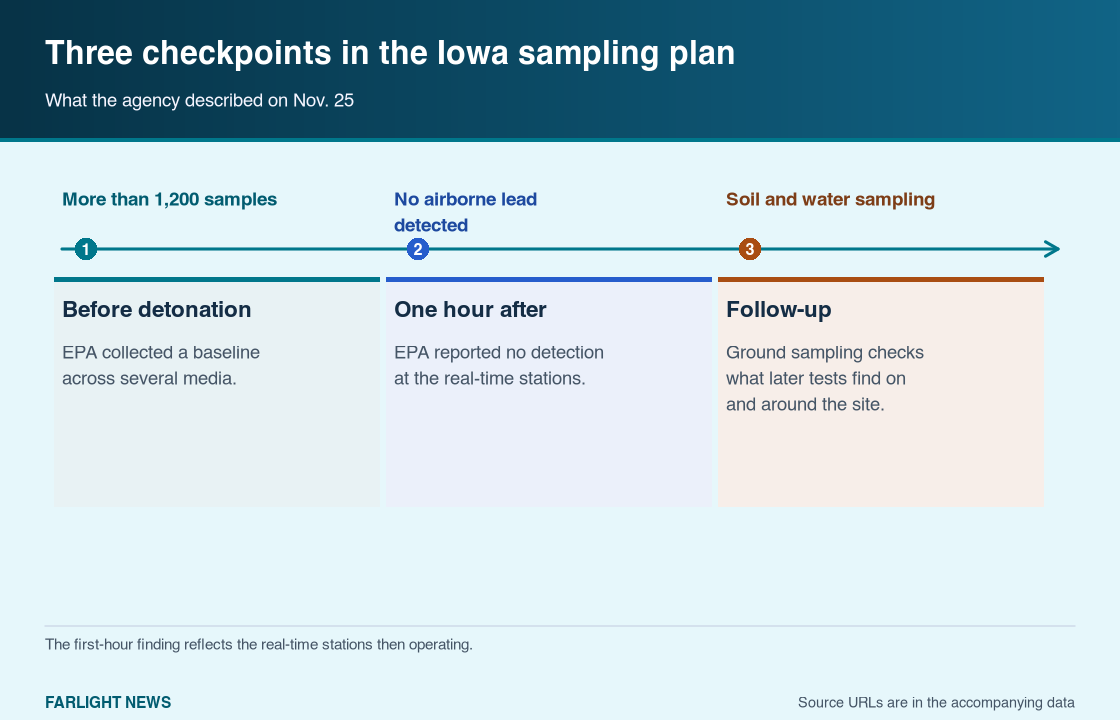
One hour after the detonation, the EPA reported no detection of airborne lead at its real-time stations. Before the operation, the agency said it had collected more than 1,200 samples across several kinds of material. Those earlier samples give investigators a baseline for checking whether later readings changed.
The first hour of air readings covered the locations where monitors were operating. Investigators also planned to sample on the ground, which can reveal material left on soil or surfaces. The two tests describe different ways lead can move through the environment.
Farlight’s Iowa map shows each monitor’s posted reading and sample time. Its separate wind layer shows observed air movement from weather stations. Following a wind arrow past a monitor cannot tell you what concentration an instrument would have measured there.
Three checkpoints in the Iowa sampling plan
What the agency described on Nov. 25
Sources
Read next

Viral · Politics · Archive, free sign-in
A candidate could lose a debate spot under the party’s proposal. Outside spending follows a different set of rules.

Viral · Politics · Archive, free sign-in
FactCheck.org reconstructed the remarks behind a Ken Paxton ad about James Talarico’s religious views.