
U.S.
EPA reports no airborne lead in first tests after Iowa blast
The Army destroyed nearly five tons of unstable material at its Middletown plant. Air monitors showed no detection in the first hour, and officials continued sampling.
Iowa · Environmental monitoring
Iowa lead monitoring and weather
The Nov. 25 controlled blast took place at the Iowa Army Ammunition Plant near Middletown. Open an EPA monitor to see what it recorded and when.
EPA values describe the air sampled at each pin. Areas between monitors have no readings on this map. The readings and wind arrows cannot trace a live lead plume.
Where officials flagged potential risk
Nov. 24 advisory. The Army recommended temporary relocation in Middletown and within a five-mile cone southwest of the plant. The pre-blast maps show modeled air and surface impacts.
Nov. 25 update · 3 p.m. CST. The Army reported no lead detection from air sensors at that time and said surface sampling was underway.
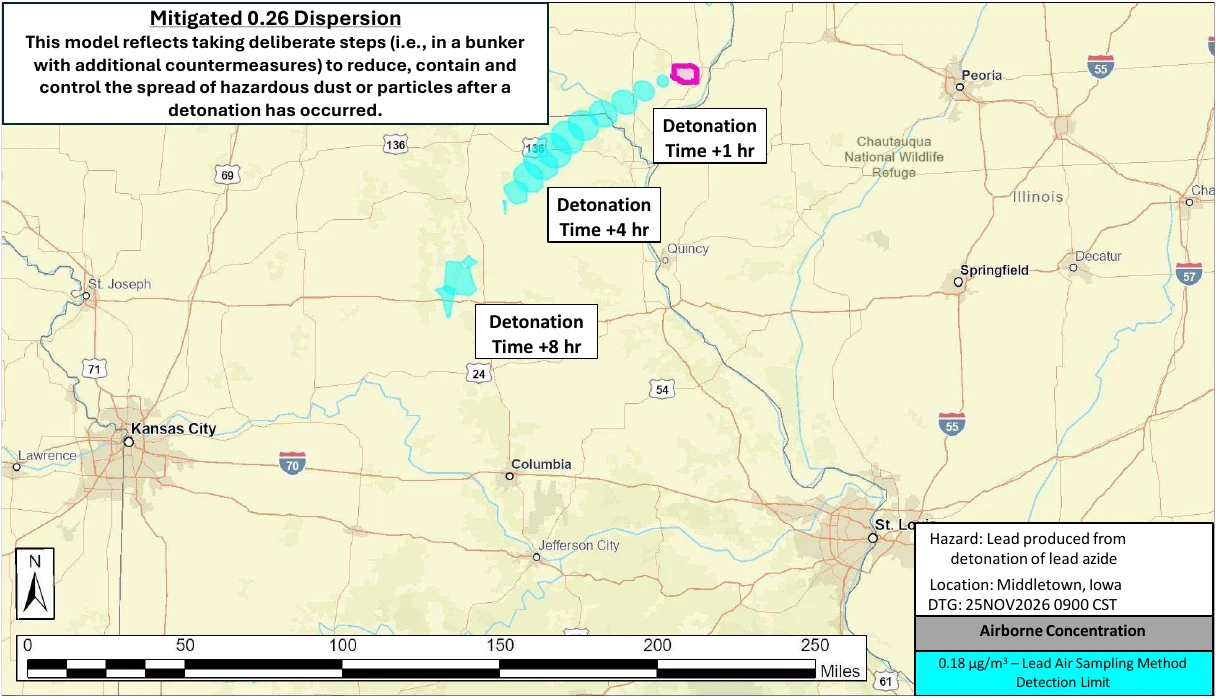
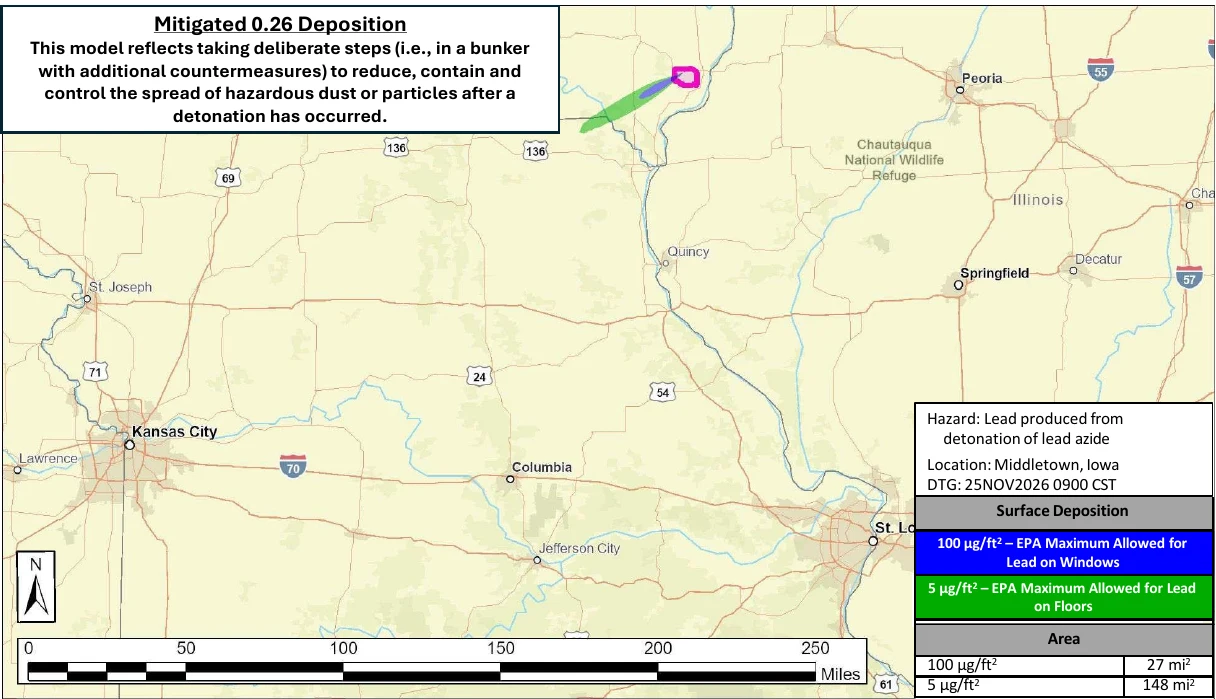
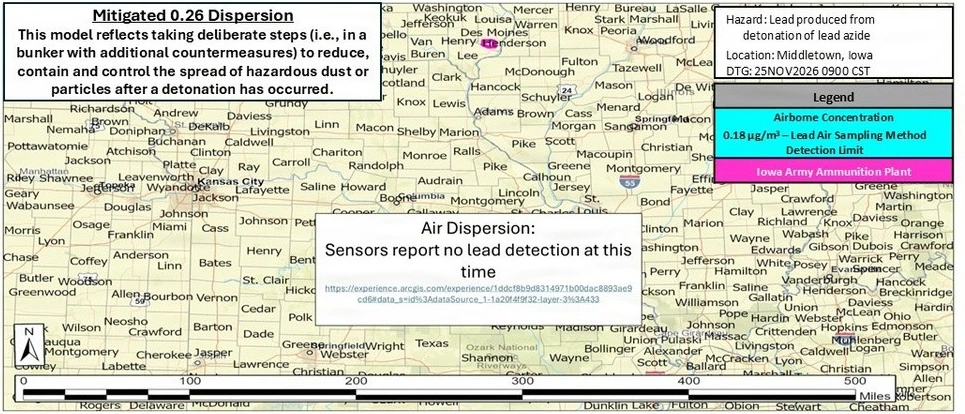
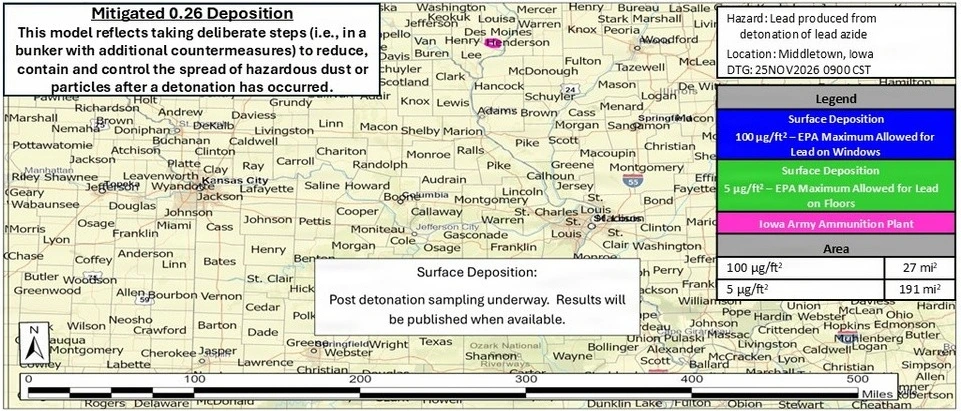
Army relocation advisory · Pre-blast maps (PDF) · Nov. 25 Army update
EPA lead monitors
Local NWS wind stations
EPA monitoring dashboard · Local NWS observations · NOAA Aviation Weather Center · Iowa State radar mosaic
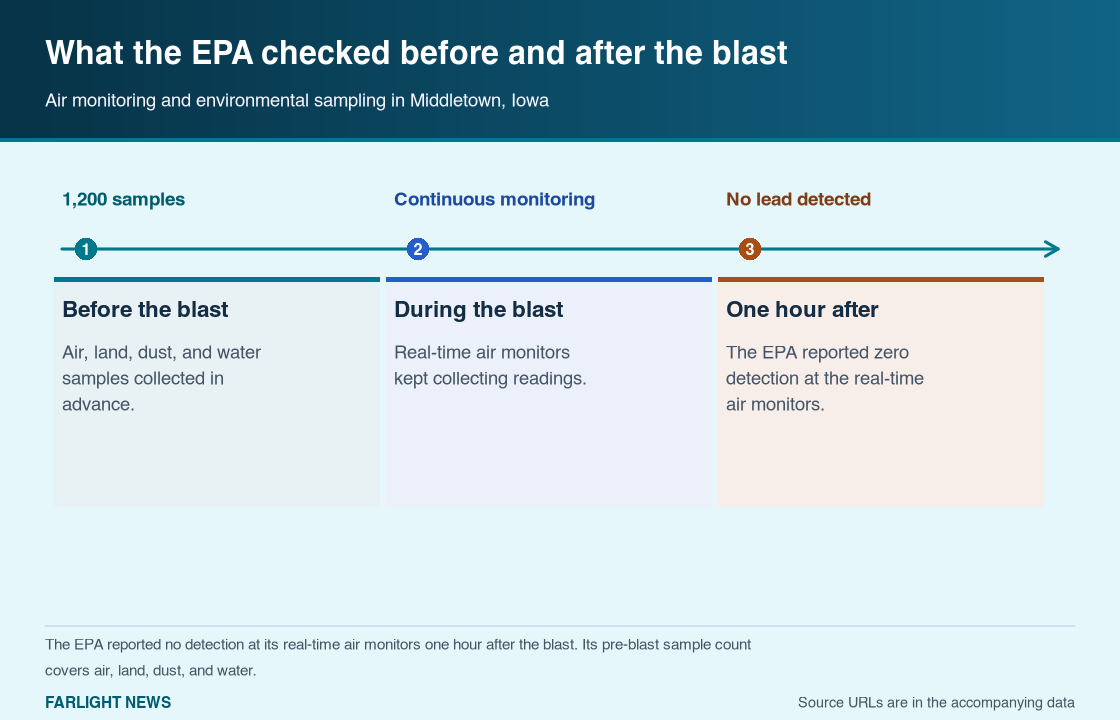
At the one-hour mark, the federal air monitors around Middletown were still reporting zero detections of airborne lead. They had been running through the Army’s Nov. 25 controlled blast. That gave Iowa and Illinois their first measured answer about the operation, at the places where the EPA had instruments.
Those places matter because the Mississippi River runs just east of the area. An air reading from one side of the river can’t describe every point on the other. Illinois EPA said it would remain on standby and review federal modeling and readings as more data came in. Federal staff had already collected roughly 1,200 samples before the blast.
That sampling gives investigators something to compare against later. The pre-blast work covered air, land, dust, and water, which can tell different parts of the same story. Air readings show what was in the air at sampling points. Testing the ground or surfaces is how investigators look for material that may have settled.
The Army’s 3 p.m. Central update still reported no lead detection at the air monitors and said surface sampling was underway. The earlier advisory’s southwest exposure maps were drawn before the blast to guide precautions. The readings on the live map come from instruments, and the model maps document where officials had warned people ahead of time.
The monitor pins on the map show the concentration, location and observation time for each posted reading. The surface results, when agencies publish them, will answer the question the first hour of air monitoring leaves open.
What the EPA checked before and after the blast
Air monitoring and environmental sampling in Middletown, Iowa
Sources
Read next
U.S. · Archive, free sign-in
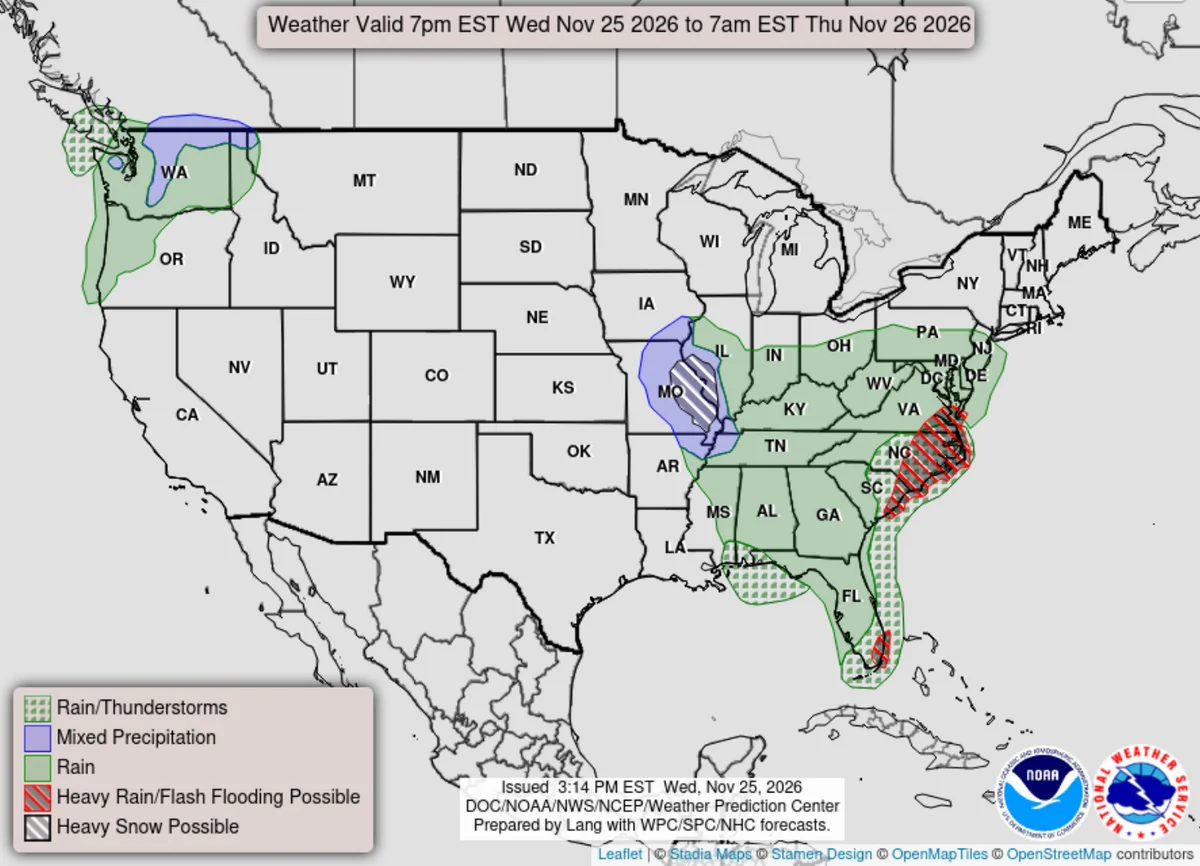
A Pacific system and a storm moving through the East could bring delays at the start of the holiday rush.

U.S.
The 100th parade is now scheduled for 8:30 a.m. Saturday. City officials warned that strong winds, heavy rain and the evening high tide could overlap on Thanksgiving.