
Weather
Six days of global heat above 2°C put the focus on a longer trend
The Guardian reported the streak using Copernicus data. Daily records and long-term warming are measured over different time spans.
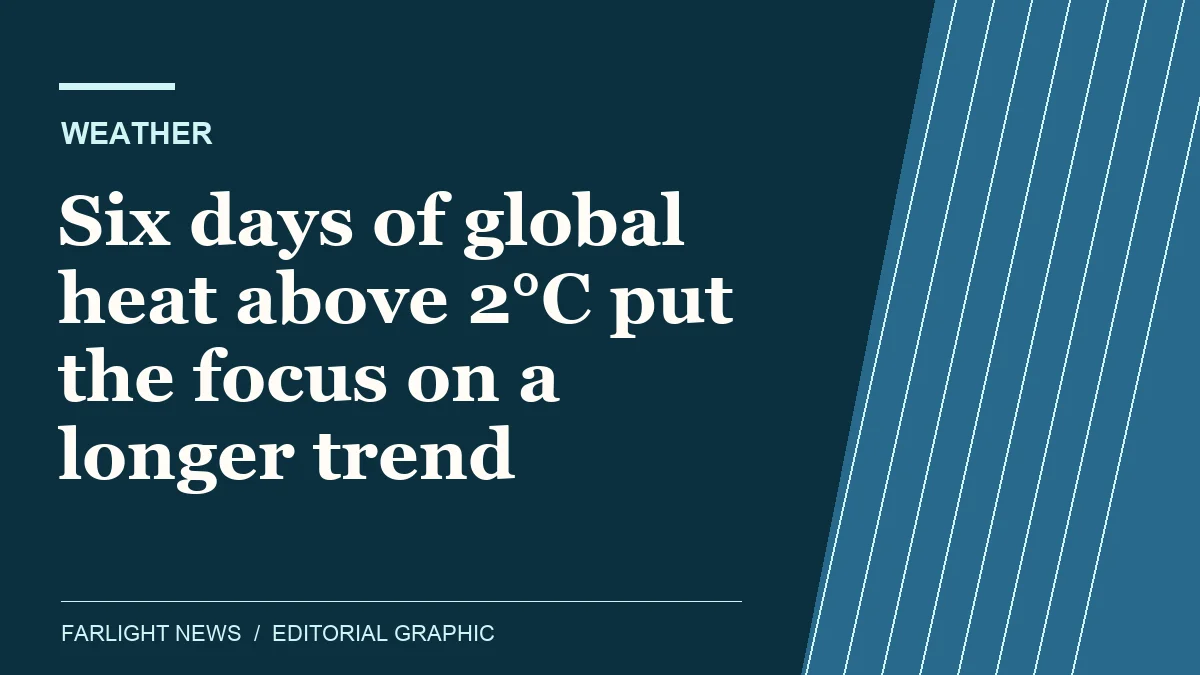
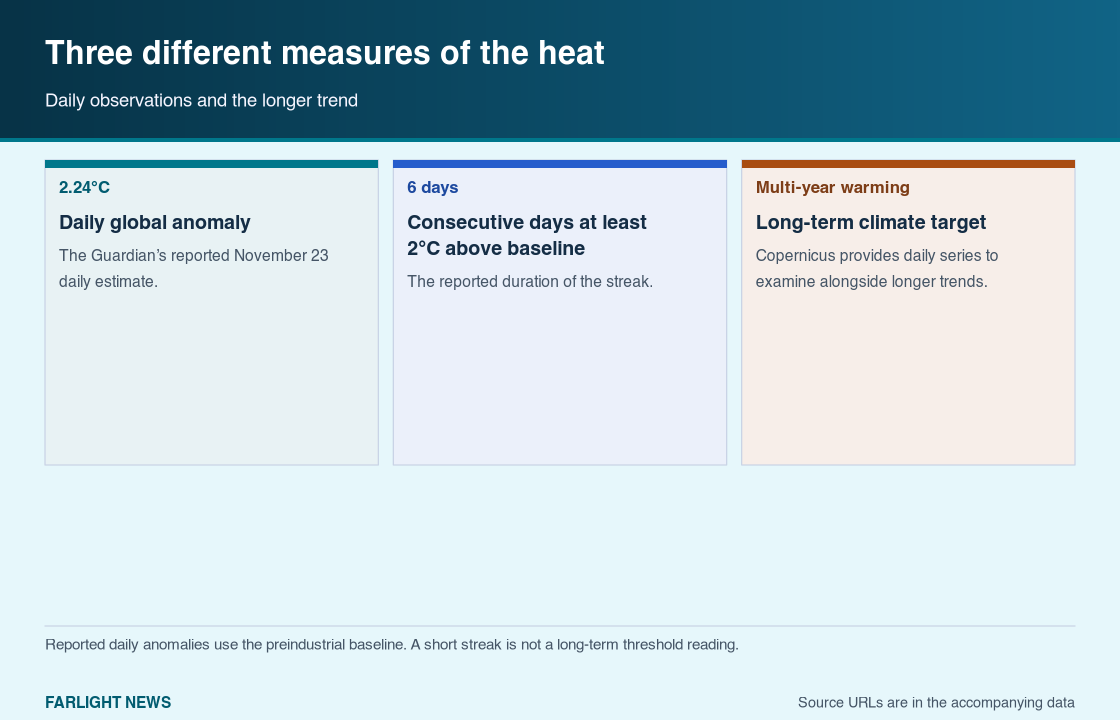
Global daily temperatures were at least 2°C above the preindustrial baseline for six straight days, The Guardian reported on Nov. 25 using Copernicus data. The newspaper put the highest daily reading in the streak at 2.24°C above the baseline on Monday, Nov. 23.
Copernicus estimates global temperatures by combining observations and atmospheric modeling. Its Climate Pulse service publishes daily estimates. El Niño can temporarily lift the global average on top of the longer warming trend.
The Paris Agreement concerns sustained global warming. A six-day streak is a short-term record and gives a different measure from the long-term average. The next monthly and annual updates will show how the spike fits into that longer record.
Three different measures of the heat
Daily observations and the longer trend
Sources
Read next
Weather
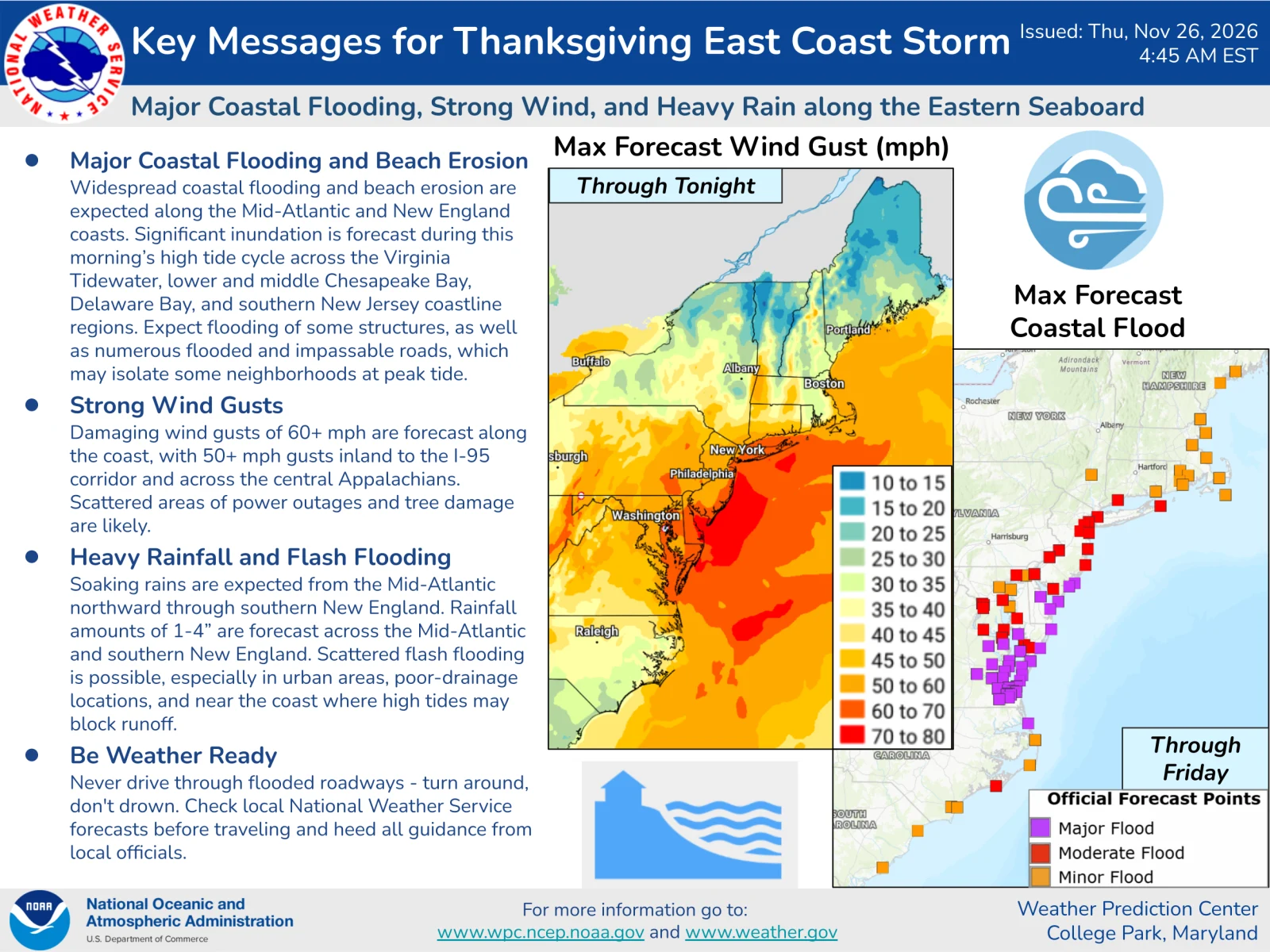
High tide flooded stretches of the coast from North Carolina to New Jersey. Wind shut the Chesapeake Bay Bridge-Tunnel for several hours, and seawater covered part of the Outer Banks highway.
Weather · Archive, free sign-in
NOAA warned that Thursday morning’s high tide could inundate roads around Chesapeake and Delaware bays and along the southern New Jersey coast. Heavy rain and strong winds add separate risks.