
Banned News · War & human rights
Gaza’s hunger figures come with two dates. Both matter.
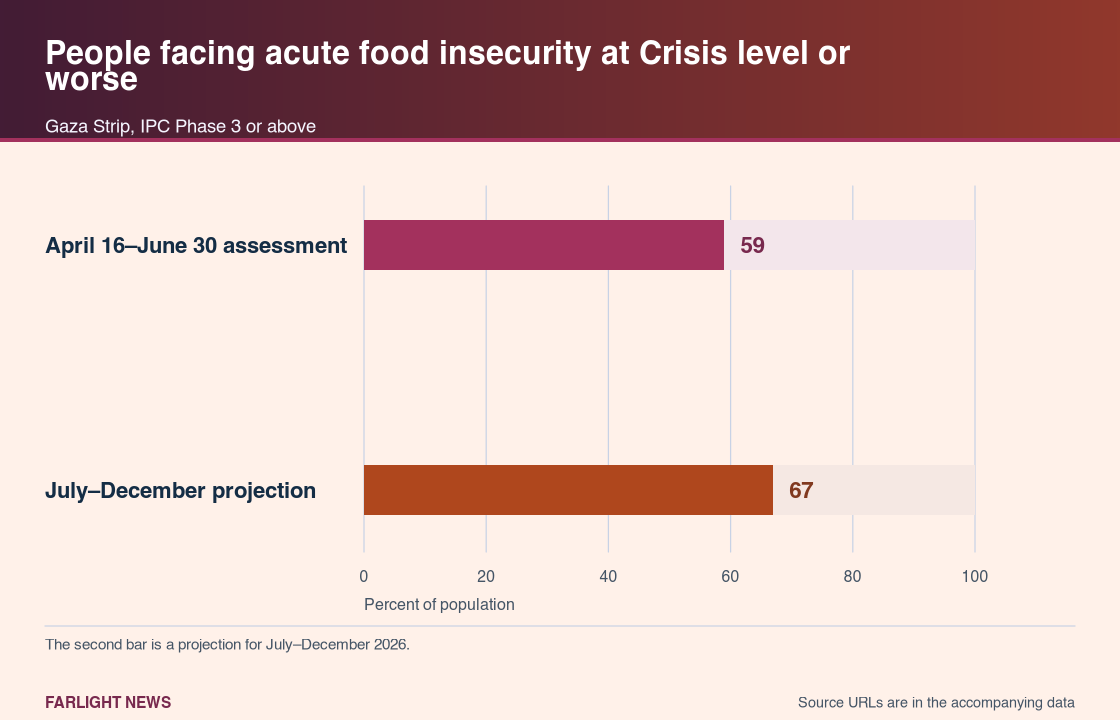
The IPC put 59% of people in Crisis or worse through June and projected 67% for July–December. Those figures answer different questions.
The IPC assessment covering mid-April through June put more than 1.2 million people in Gaza in Crisis or worse for acute food insecurity. That was about 59% of the population in the analysis. Around 212,000 were estimated to be in Emergency, a more severe category within that total.
For July through December, the IPC projected more than 1.4 million people, or 67%, in Crisis or worse. It is a forward-looking estimate built from assumptions about conditions such as access, economic activity and insecurity. A November story can say what that projection anticipated. It takes a new assessment to say what the classification was in November.
The field data show why dates matter. OCHA published an October market survey finding that three-quarters of surveyed households had difficulty accessing markets. Humanitarian meals, market access and a household’s food-security classification measure different things. Together they describe the obstacles between a family and enough food.
People facing acute food insecurity at Crisis level or worse
Gaza Strip, IPC Phase 3 or above
Sources
Read next

Banned News · War & human rights
WHO reported six people killed and at least 27 injured. The attack also damaged operating rooms, intensive care and recovery facilities.
Banned News · War & human rights
The UN’s November snapshot carries figures from Gaza’s health ministry. Identified fatalities and deaths reported after the ceasefire have different cutoffs.