
Science & technology · Space engineering
Dragonfly has seven cameras. Some will help decide where it can drill on Titan.
NASA says the cameras have been installed and tested. Each has a different job during the rotorcraft’s mission.
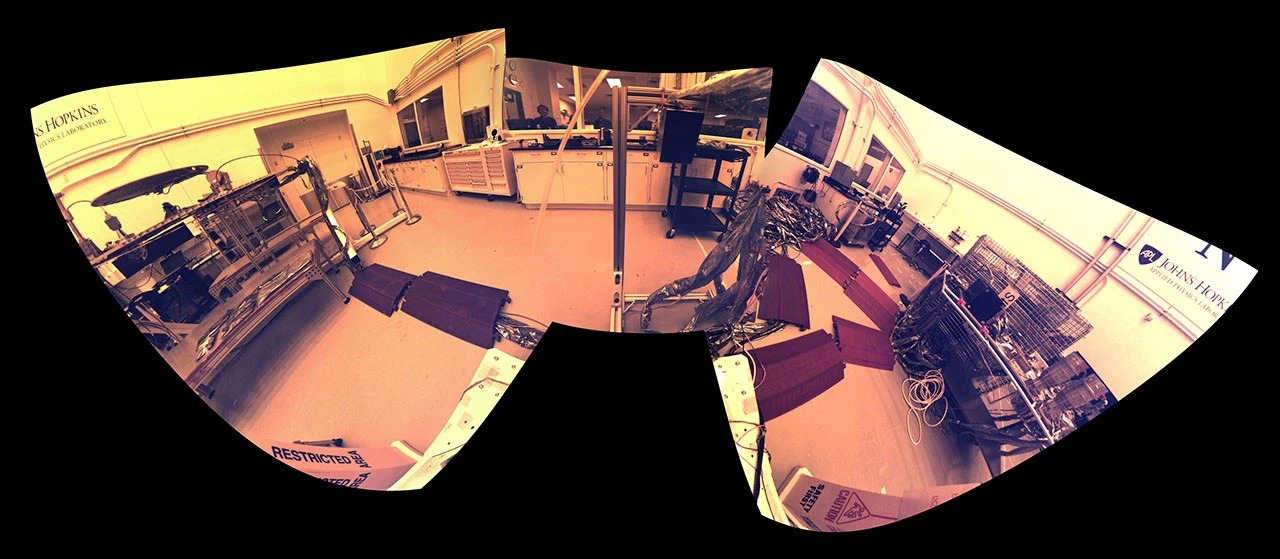
Two of the first cameras installed on NASA’s Titan rotorcraft look down. They’ll help the team see whether the ground under Dragonfly is suitable for using its drill and seismometer. It’s one of several jobs for the camera system NASA described this week.
NASA said on Nov. 24 that all seven cameras had been integrated and tested by mid-month. The forward wide-angle camera covers 90 degrees. A second forward camera overlaps with that view at higher resolution, letting the spacecraft capture a stereoscopic view.
The first images show a cleanroom in Maryland, where technicians were assembling the spacecraft. NASA says their yellow tint comes from the way the cameras capture light. The instruments will eventually document Saturn’s moon from the air and while the vehicle is on the ground.
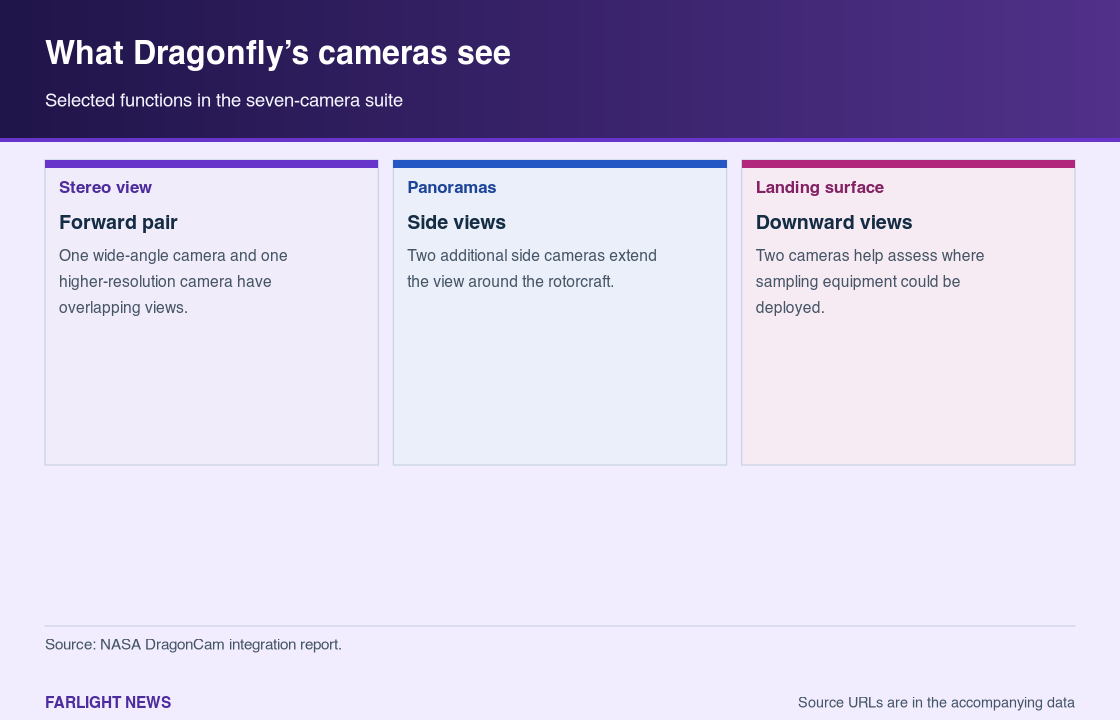
What Dragonfly’s cameras see
Selected functions in the seven-camera suite
- Forward pairStereo view
One wide-angle camera and one higher-resolution camera have overlapping views. Source
- Side viewsPanoramas
Two additional side cameras extend the view around the rotorcraft. Source
- Downward viewsLanding surface
Two cameras help assess where sampling equipment could be deployed. Source
Sources
Read next

Science & technology · AI hardware
The Financial Times reported a pause by Nvidia’s manufacturing partners in Southeast Asia. The federal licensing rule also covers Brazil.

Science & technology · Space
New ESA imagery shows a broad impact feature on Dimorphos, four years after NASA intentionally hit the asteroid.