
Viral · Health & wellness
Doctor Mike’s TikTok reactions raise a harder question: where did the claim come from?
The reaction format gets health advice in front of a big audience. Checking a claim starts with finding the evidence behind it.
Doctor Mike used a YouTube reaction video to put a collection of medical TikToks in front of a second audience. The format puts a claim and a response close together. It also gives viewers a useful moment to pause and ask what evidence the original clip actually supplied.
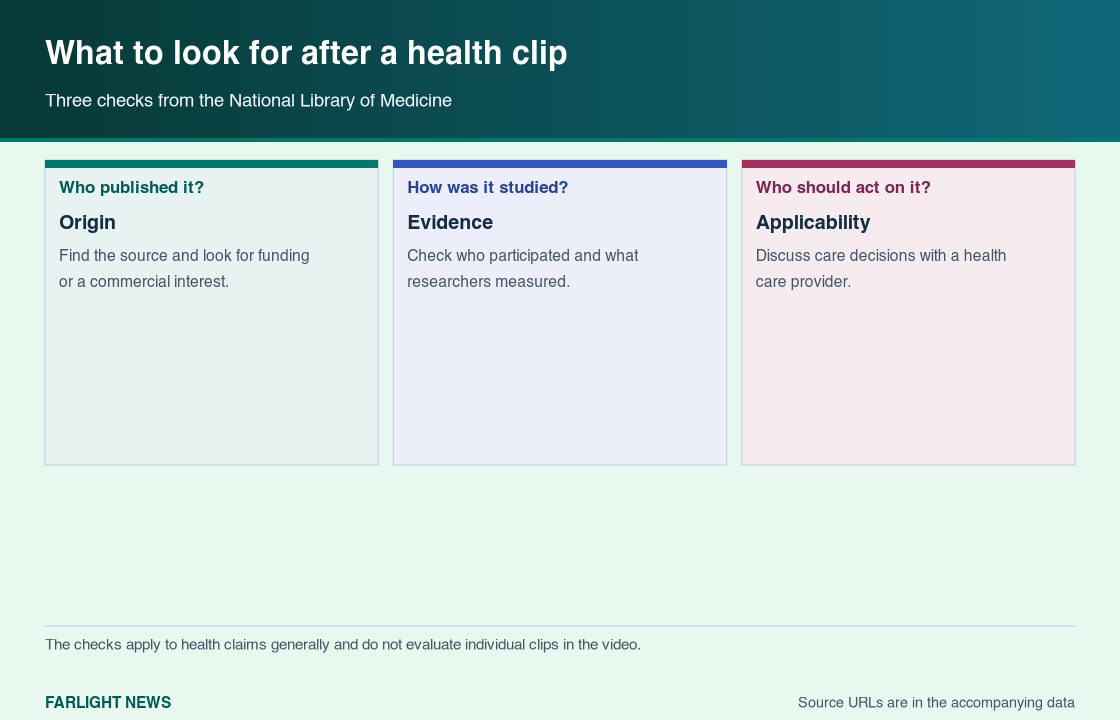
The National Library of Medicine’s guidance starts with the source. Who made the claim, who paid for the work, and what did the study measure? An experiment in cells or animals can help researchers decide what to test next. A finding in people calls for checking who took part and how the researchers measured the effect.
The other question is what the video is asking a viewer to do. A clip that explains a concept is different from a recommendation to buy a product or change a treatment. The National Library of Medicine advises checking online claims against reliable sources and discussing decisions about your care with your health care provider.
The video is an example of the reaction format. For a specific claim, the useful next stop is the original research or clinical guidance, where the study population and limits are visible.
What to look for after a health clip
Three checks from the National Library of Medicine
Sources
Read next
Viral · Health & wellness · Archive, free sign-in
Creators turned fiber intake into a target they could show on screen. UCLA Health looked at which part of the trend holds up.
Viral · Health & wellness · Archive, free sign-in
The viral drink combines tart cherry juice and magnesium. Researchers and clinicians have smaller questions about what it can do.